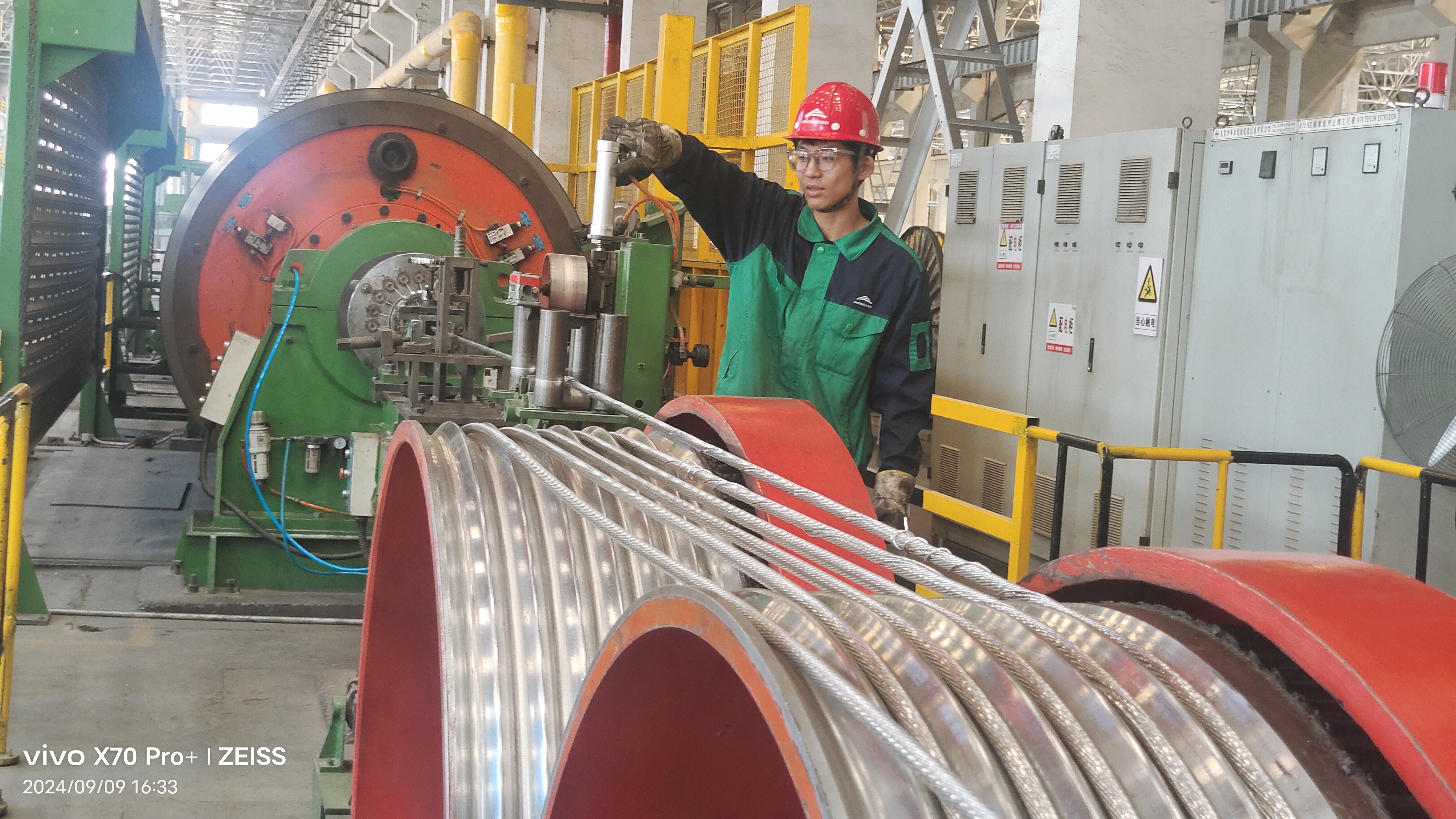

Procurement answer: copper is usually preferred when compact size, conductivity and termination reliability are priorities; aluminum is considered when weight and budget are major constraints. A copper vs aluminum power cable decision should be made with ampacity, voltage drop, installation space, termination method and lifetime maintenance in one comparison.
JINCHUAN supplies copper conductors and power cable solutions for industrial and infrastructure buyers. The goal is not to claim one conductor is always better. The useful question is which conductor reduces total project risk for the specific route.
Comparison table
| Factor | Copper cable | Aluminum cable |
|---|---|---|
| Conductivity | Higher conductivity in smaller cross-section | Usually needs larger cross-section for similar electrical performance |
| Weight | Heavier | Lighter, helpful for some long routes |
| Termination | Generally simpler and familiar to many installers | Requires correct lugs, preparation and torque control |
| Budget | Higher material cost | Often lower conductor material cost |
| Space | Useful where tray, duct or panel space is limited | Larger size may affect route and accessories |
Do not compare only by cable price
A copper vs aluminum power cable comparison that uses only price per meter is incomplete. Aluminum may reduce conductor cost, but larger diameter, termination accessories, pulling method and panel space can change the real installed cost. Copper may cost more per meter but reduce size and simplify some installation work.
Project scenarios
For compact industrial distribution cabinets, copper is often attractive because space is limited. For long overhead or large-scale distribution routes where weight matters, aluminum may be evaluated. For export projects, the buyer should also consider what local installers are familiar with. A technically correct design can still create site problems if the termination team is not prepared.
Questions to ask before choosing
- What is the current rating and acceptable voltage drop?
- Is route space limited?
- Will the cable be direct buried, in duct, on tray or overhead?
- Are aluminum-compatible terminals and tools available locally?
- Does the owner standard restrict conductor material?
- How important are spare capacity and maintenance access?
JINCHUAN procurement guidance
When buyers request copper vs aluminum power cable advice, JINCHUAN can compare conductor size, cable OD, approximate weight, sheath choice, packing and documentation under the same project assumptions. This avoids a misleading “cheap vs expensive” discussion.
Review JINCHUAN power cable products and the IEC power cable standard guide when conductor selection is part of a broader standards discussion.
Product positioning for conductor decisions
The copper vs aluminum power cable decision is a system design choice with procurement consequences. Copper helps with compact size and conductivity. Aluminum can reduce weight and material cost. Neither option should be chosen from metal price alone.
Buyer types and decision pressure
Panel builders may prefer copper because termination space is limited. EPC contractors may compare aluminum for long routes where weight matters. Industrial owners may prefer the conductor their maintenance team understands. Traders may need side-by-side data to explain the choice to customers.
Installation and maintenance details
Aluminum requires careful termination practice, compatible lugs and torque control. Copper is more familiar in many industrial sites, but it still needs correct bending, pulling and termination. A conductor decision that ignores local installation capability can create long-term maintenance issues.
Cost model beyond price per meter
A useful comparison includes cable size, tray space, pulling difficulty, accessories, termination labor, spare capacity and future maintenance. JINCHUAN can help buyers compare these items under the same project assumptions.
Equivalent performance comparison
Buyers should avoid comparing the same cross-section only. A fair copper vs aluminum power cable study compares equivalent ampacity and voltage drop. This may mean the aluminum option uses a larger size, different cable OD and different accessory package. Once those changes are included, the commercial conclusion may change.
Installer capability check
Before choosing aluminum, the buyer should confirm that local installers have the right lugs, preparation method, torque tools and inspection practice. Before choosing copper, the buyer should confirm that cable weight and drum handling are acceptable. The better conductor choice is the one the project can install correctly.
Specification table for comparison
| Load | Current and duty cycle | |
| Route | Length, installation method and space limit | |
| Voltage drop | Allowed percentage or engineering limit | |
| Conductor | Copper or aluminum with equivalent performance | |
| Accessories | Lugs, glands, joints and termination tools | |
| Maintenance | Installer familiarity and inspection plan | |
| Documents | Datasheet and test report for selected option |
Decision comparison
| Copper | Compact routes and high conductivity needs | Higher material cost but easier compact design |
| Aluminum | Weight-sensitive or budget-sensitive long routes | Larger size and termination control needed |
| Hybrid package | Different zones with different priorities | Can optimize cost without forcing one material everywhere |
Additional Buyer FAQ
Does aluminum always save money?
Not always. Larger size, accessories, termination labor and route changes can reduce the apparent saving.
Is copper better for short routes?
Often copper is attractive for compact short routes, but the final answer depends on load, space and budget.
Can copper and aluminum be used in the same project?
Yes, different zones may use different conductors if the design and terminations are managed properly.
What information does JINCHUAN need for comparison?
Load, voltage, route length, installation method, allowed voltage drop and owner restrictions are needed.
Why does termination matter for aluminum?
Aluminum connections require compatible materials and correct installation practice to avoid overheating or loosening.
Should buyers request equivalent performance comparison?
Yes, compare cable options by equivalent current and voltage drop, not by identical cross-section only.
What is the safest procurement approach?
Ask for a comparison table that lists assumptions, size, weight, OD, accessories and documents for each option.
FAQ
Is copper always safer than aluminum?
No. Safety depends on correct design, installation and termination. Copper has practical advantages, but aluminum can be safe when engineered and installed properly.
Why does aluminum need a larger size?
Because aluminum has lower conductivity than copper, the design often uses a larger cross-section to reach comparable electrical performance.
What should be written in the RFQ?
State whether the buyer wants copper vs aluminum power cable comparison, then provide load, route length, voltage, installation method and any owner restrictions.
Authority references
For construction and testing context, buyers can review the IEC 60502 series. The final conductor choice should also follow local electrical design rules and project owner standards.